
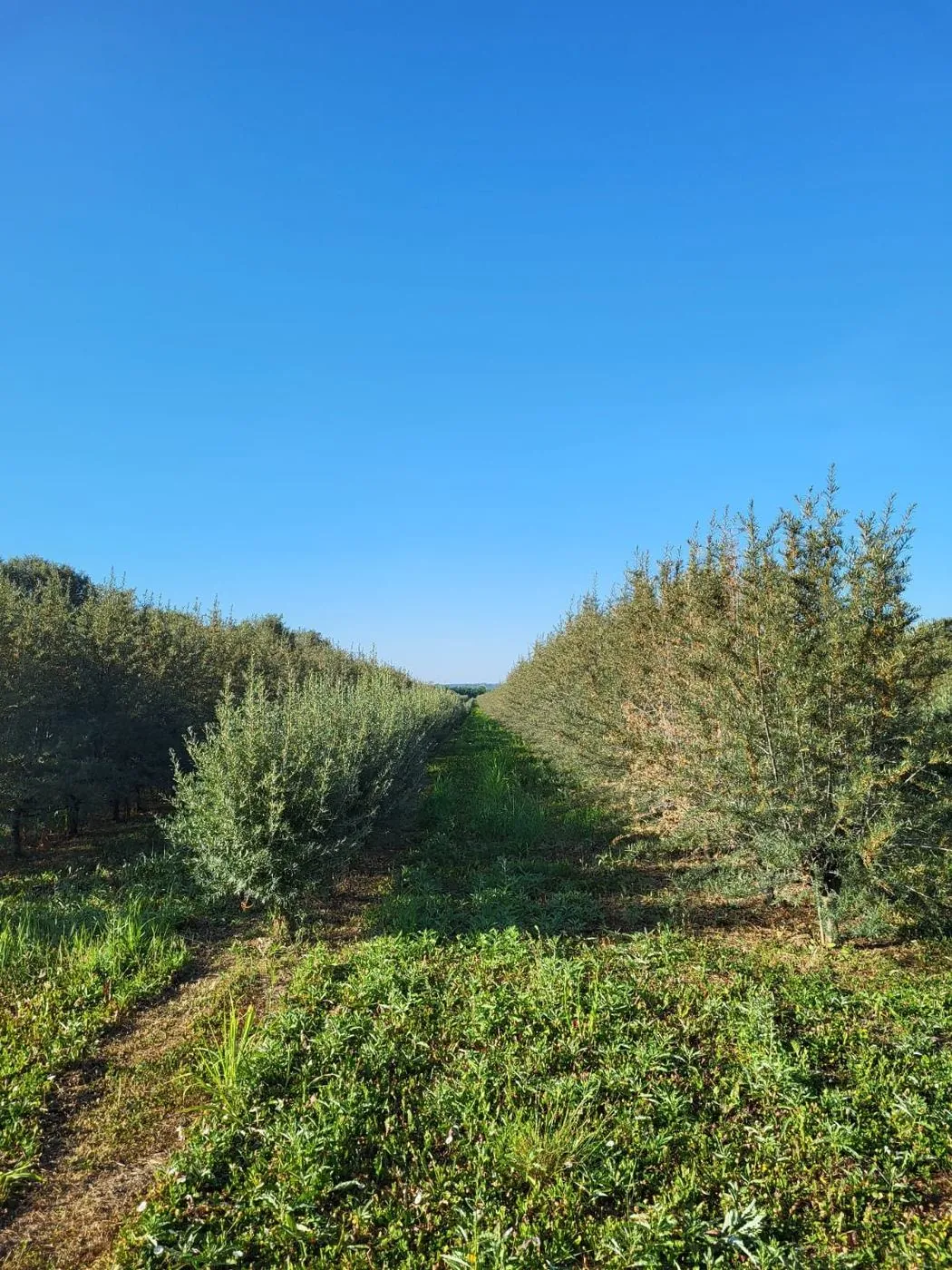
A plant described only as “sea buckthorn” is identified by species, not necessarily by cultivar. For a commercial orchard, a catalogue name is only a starting point: you need a clear link between the cultivar ordered, how it was propagated, nursery records and the delivered plants. This matters when one delivery will establish years of production.
Key takeaways
- Put the cultivar name and identity of each lot in the written order and delivery records.
- Ask how plants were propagated and how each batch links to its source plants.
- Treat an EU plant passport as plant-health and traceability documentation, not standalone proof of cultivar identity.
- Reconcile labels with supplier records before planting, while lots are still separate.
A variety name is different from a species name
“Sea buckthorn” or Hippophae rhamnoides identifies the crop species. A named cultivar is a more specific selection within that species, chosen for traits growers may plan around, such as relative harvest position, vigour or fruit profile. A young plant does not make its identity self-evident.
Seed propagation combines genetic material and produces offspring that can differ from the parent. Vegetative propagation, such as propagation from cuttings, generally reproduces the parent plant’s genotype and is used to maintain cultivars, with some biological exceptions.1 Ask the supplier to state the propagation method and identify the source or mother-plant block associated with the batch. Records should connect that source to the propagation lot, commercial batch and plant labels. This chain provides an auditable trail that supports traceability. Records alone do not independently prove that a delivered plant is true to type.
Use documents together, not one label in isolation
An EU plant passport carries plant-health and movement information. Its fields include the botanical plant name, registered professional operator, traceability code and country of origin or production.2 These details help trace regulated plant material. EU passport formats include a botanical name and may optionally include a variety name; even when present, that name and the traceability code are not independent proof that a delivered plant is true to type.4 Ask for a source-to-lot documentary trail alongside the applicable plant passport. Ask for cultivar and batch records alongside applicable passport documentation.
| Checkpoint | Ask for or verify | What it establishes—and what it does not |
|---|---|---|
| Written order | Exact cultivar on each line; male pollinator listed separately | Records what you agreed to buy, not what was packed |
| Propagation source | Method and source or mother-plant reference for each lot | Connects selection to production records; a general nursery description is not a lot link |
| Batch record | Identifier repeated on labels and delivery documents | Allows reconciliation with supplier records; a code without a record trail is insufficient |
| Plant passport | Applicable passport label and traceability details | Supports plant-health movement and traceability; does not alone confirm cultivar |
| Receipt and planting map | Count, cultivar, lot IDs and field rows | Preserves identity for orchard records; appearance alone may not resolve a mismatch |
Record formats differ. The useful test is whether the same cultivar name and lot identifier can be followed across the order, source records, labels and delivery paperwork. Keep copies with the planting plan rather than relying on a label that may become detached.
Check the plants before mixing or planting lots
On delivery, keep lots separate until labels and paperwork have been checked. Compare cultivar, quantity and lot identifiers on the order, plant labels and dispatch documents. Photograph discrepancies and contact the supplier in writing before mixing or planting. If identity cannot be reconciled, ask for an explanation and a documented resolution.
Appearance may prompt questions, but is not proof. Young plants may not display distinguishing fruit traits. Later, fruit appearance and composition can still vary with growing conditions and maturity. Sea buckthorn is dioecious, with male and female plants; sex is not cultivar identity. Orberry’s portfolio includes female cultivars Mara, Clara, Cora and Dora, and the male pollinator Andros. Review the Orberry varieties and specify female cultivar and pollinator separately.
When records conflict, ask the supplier to trace the batch through production records rather than relying on a photograph. Genetic testing may be a specialist option in a genuine dispute, but a qualified laboratory must confirm that an appropriate reference and method exist. Research reports DNA markers applied to sea-buckthorn cultivar discrimination, while noting that relatively few markers have been developed for selection and breeding.3 That review does not validate an assay for the buyer’s cultivar or delivery batch.
What this means for a commercial orchard
A mislabeled lot can compromise a block plan, harvest sequence or processor specification years after paperwork is filed. Before ordering, create an identity register listing each cultivar, sex, intended block, supplier lot, source reference and expected documents. At receipt, reconcile the records and carry lot identifiers into the orchard map. Mapping each lot before planting helps keep later observations and fruit samples traceable.
Orberry states that its professional planting material is propagated from the certified mother plantation of the varieties and supplied with phytosanitary passport documentation. Buyers can ask for project-specific cultivar and traceability information. The product specification separates cultivar from plant age, format and size; see professional planting material. For broader planning, review how to choose a commercial cultivar and plant requirements per hectare. If you are still deciding which genetics fit, contact Orberry about your project.
References
- 13. Propagation
- Plant passports
- The Systematics, Reproductive Biology, Biochemistry, and Breeding of Sea Buckthorn—A Review
- Commission Implementing Regulation (EU) 2017/2313 of 13 December 2017 setting out the format specifications of the plant passport for movement within the Union territory and the plant passport for introduction into, and movement within, a protected zone
Planning an orchard with these varieties? Adelin answers project questions directly.