
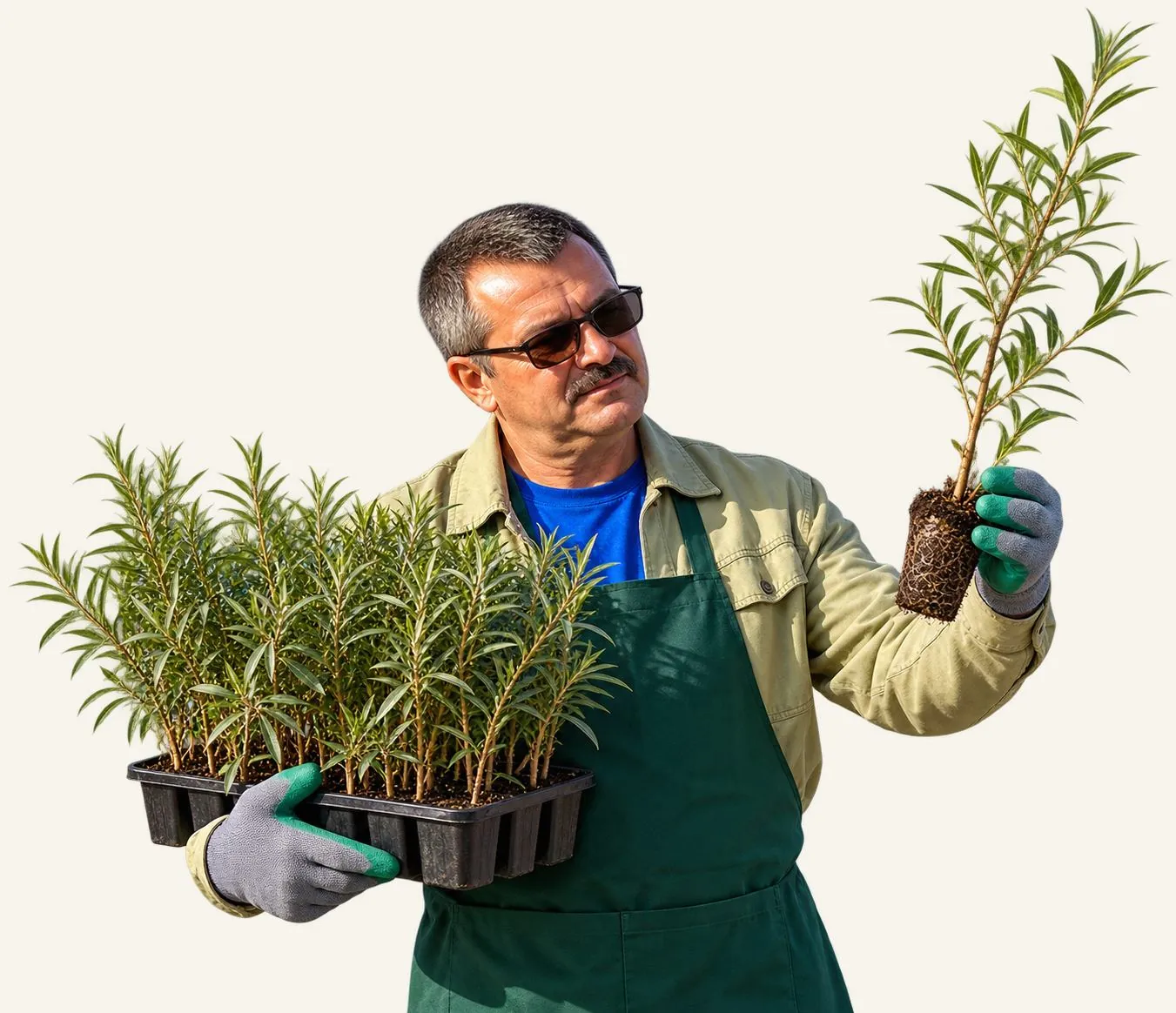
Choosing between Year 1 and Year 2 plants is not simply choosing small or large. Age, measured height, root condition, format and planting logistics are separate specifications. The better purchase is the batch that fits the site and operation—not automatically the older plant.
Key takeaways
- Age and height are separate attributes. Height alone does not establish age or quality.
- Compare roots and plant condition alongside the shoot; a taller plant is not automatically better established. 1 2
- Select material against the planting window, handling capacity and project plan.
- Ask for a batch-specific specification and quote; age/size combinations vary by production and season.
What Year 1 and Year 2 tell you—and what they do not
Orberry describes Year 1 as young commercial planting material for efficient establishment and professional projects. Year 2 is more developed material offered according to nursery availability and project requirements. These labels indicate plant age, not a quality grade or a guaranteed height, root volume, planting response or fruiting date. See Orberry planting material for the product specifications.
Ask the nursery how it defines the age label for the quoted batch. Do not confuse nursery age with years established in the orchard. Nor is age a forecast of early crop or commercial yield: an age label alone cannot substantiate a production promise.
Specify dimensions, roots and format separately
Orberry's public size bands are 40–60, 60–80, 80–120 and 120+ cm. Confirm the quoted batch's actual range and measurement basis, plus stem calibre if specified. Do not infer size from age or substitute generic S/M/L/XL labels. Confirm the proposed size band in a project-specific quotation.
Root development and overall condition matter alongside shoot size. General nursery guidance considers root and stem characteristics, but does not set universal sea buckthorn grading thresholds. Ask for the actual batch specification and traceability; a height photograph cannot answer those questions. 1 2
Either age may be offered as bare root or potted, depending on the batch. Age is not format. Bare-root stock needs protection from drying and coordination between delivery and planting. Potted stock retains a root ball and may offer handling flexibility, but container and root-ball condition still matter. Extension guidance likewise stresses that stock type affects root handling and that buyers should inspect roots rather than judge only the visible top growth. 1
For either option, confirm packing, delivery period, root or container details and protection before planting. Plan unloading and planting labour around the actual batch. If work is phased, ensure delivery matches site preparation and planting sequence.
A practical comparison for a commercial order
| Decision factor | Year 1 may fit when… | Year 2 may fit when… | Confirm before ordering |
|---|---|---|---|
| Plant specification | The batch meets the required height and root/format criteria. | The more developed batch meets those criteria and suits the operation. | Age definition, measured height, calibre if specified, root quality. |
| Planting operation | Crew and equipment suit the supplied stock. | The project can handle the offered dimensions and format. | Packing, delivery window and planting sequence. |
| Whole project | Cultivar mix and quantity fit the orchard plan. | Batch specification and timing fit the same plan. | Variety, Andros layout, format, size and quantity together. |
Neither age is generally superior. Compare actual lots for your project. Review cultivar options at Compare Varieties and separate age, format and size fields at Professional Planting Material.
Estimate the quantity, then confirm the order
Use positions per hectare = 10,000 ÷ (row spacing in metres × in-row spacing in metres) for an initial geometric estimate. At 3.5 m × 1.25 m, that is 2,286 positions per hectare; the same geometry gives 11,429 positions for 5 ha and 22,857 for 10 ha, before headlands. See the Orberry orchard calculator to adjust area and spacing.
These are area-geometry estimates, not quantity commitments. Headlands, boundaries, access, machinery, layout and pollination affect the final schedule. Use the orchard calculator as a starting point, then confirm quantities for the parcel.
What this means for a commercial orchard
Specify Variety → Plant Age → Format → Size → Project Quantity. Compare Year 1 and Year 2 batches against the site and planting schedule. Make root condition, dimensions, traceability and delivery explicit in the enquiry. Orberry keeps these attributes separate; commercial enquiries begin at 500 plants, and combinations depend on production and project requirements. See professional planting material for details.
Share your location, area, planting season, format and approximate quantity even if the cultivar mix or layout is not final. Orberry can assess the requirements and provide a project-specific quote based on the proposed specification. See commercial orchard support for wider planning.
Your next decision
Before comparing prices, note the cultivar(s), area and spacing, delivery window, preferred format and any required height range. Ask the nursery to confirm age convention, dimensions, root or container details, traceability, documentation and delivery terms. Compare both ages on that same basis.
REQUEST A PROJECT-SPECIFIC PLANTING-MATERIAL QUOTE
References
Planning an orchard with these varieties? Adelin answers project questions directly.