
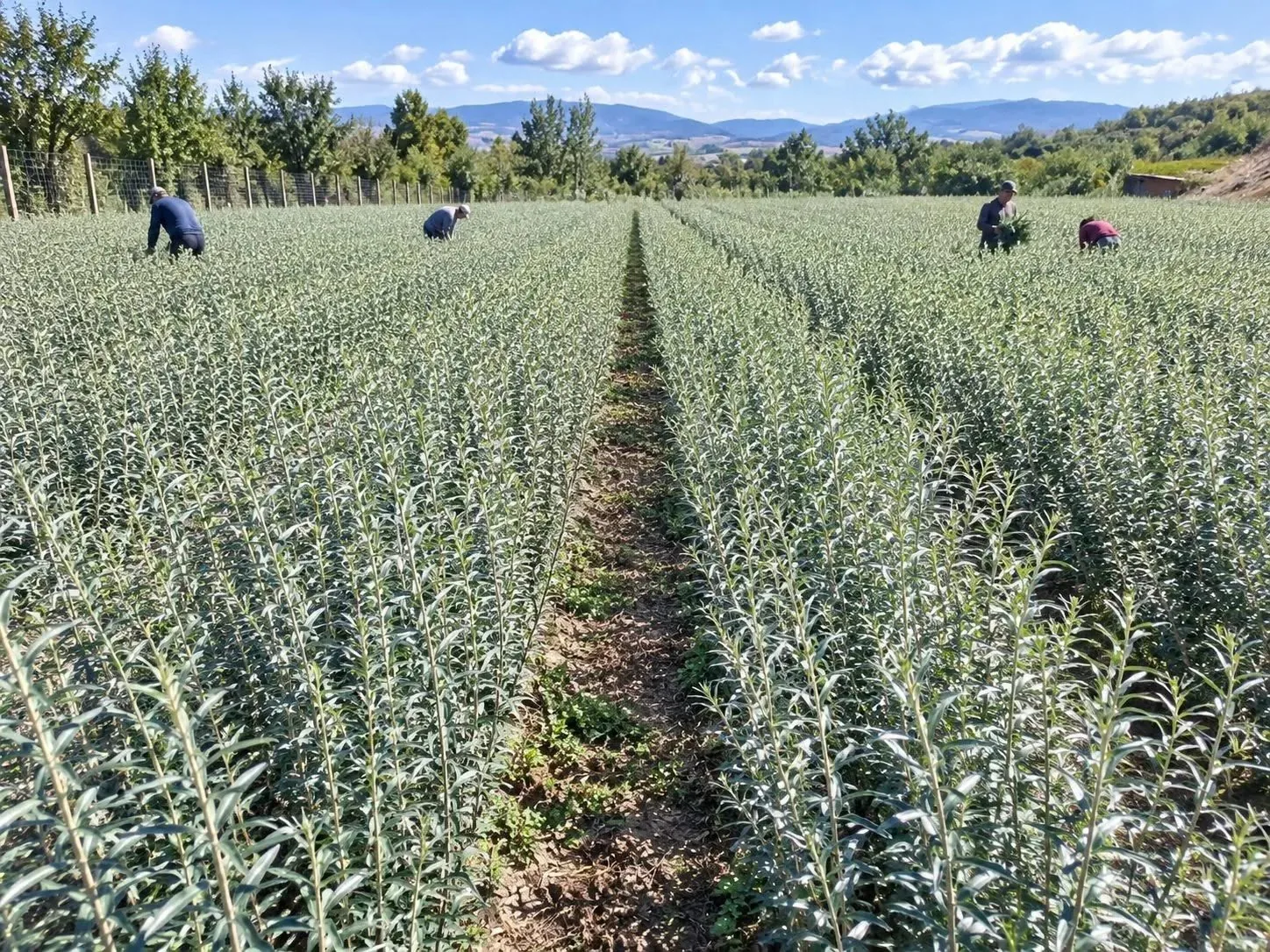
Choose planting format around your site-readiness, planting window and ability to manage delivery—not an assumption that one format is always better. Compare the actual batch by cultivar, age, size and root condition.
Key takeaways
- Bare-root plants arrive with little or no soil around the roots. They suit coordinated planting at scale, but roots must not dry out and planting is tied to a suitable seasonal window.
- Potted plants retain a root ball in growing medium. This can ease some handling and scheduling constraints, while its container and growing medium add transport volume.
- Confirm format, specification, delivery period and quantity with the nursery for your project; Orberry confirms options for the project before a purchase is agreed.
What the formats mean
A bare-root plant is lifted with little or no soil attached to its roots, which are packed to retain moisture in transit. Bare-root deciduous trees and shrubs are generally supplied dormant. This format can be economical and efficient to pack in larger quantities, but needs prompt planting or suitable temporary storage. 1 2
A potted plant is supplied in a container with growing medium around its roots. The root ball protects roots during some handling and can provide more flexibility if planting cannot follow delivery immediately. Containers and growing medium add volume to transport and stage; the root ball still needs moisture management. Inspect roots for dense circling when removing the container and follow supplier instructions. 3
Compare the choice against your operation
| Factor | Bare root | Potted |
|---|---|---|
| At delivery | Packed roots, no attached soil; prevent drying | Root system retained in container medium |
| Timing | Coordinate planting with the dormant window | More flexible in some schedules, but still weather- and soil-dependent |
| Before planting | Inspect promptly; keep cool and roots covered and moist | Keep the root ball intact and moist; avoid overheating |
| Volume | Often efficient for larger consignments | Adds container and root-ball volume to move and stage |
| Main trade-off | Tighter timing and root-protection requirements | More logistics per plant; inspect container-root condition |
For commercial orders, assess the full specification rather than height alone. Keep variety, plant age, format and size separate, as explained on the professional planting material page.
Plan handling, storage and planting timing
Prepare the site and crew before bare-root dispatch. Inspect plants on arrival, keep roots covered and packing damp but not waterlogged, and plant as soon as practicable. If delayed, store in a cool, non-freezing place according to the nursery’s instructions. Do not leave roots exposed to sun or drying air. Extension guidance stresses keeping bare roots moist during storage, transport and planting. 1 4
Potted material avoids exposed roots in transit, not all handling risks. Keep the root ball from drying, protect staged plants from harsh conditions, and inspect roots at planting. Delay planting if soil is frozen or waterlogged. Dormant-season guidance is a useful general reference for bare-root deciduous trees and shrubs, not a Europe-wide date for sea buckthorn. Confirm the workable window for your region and batch with the supplier. 2 3
Project scale: estimate positions, then confirm quantity
Format changes delivery logistics; spacing and plantable area set the initial position estimate. At the 3.5 m row × 1.25 m in-row reference spacing, density is 10,000 ÷ (row spacing in metres × in-row spacing in metres), or approximately 2,286 positions per hectare.
| Gross area | Estimated positions before headlands |
|---|---|
| 1 ha | 2,286 |
| 5 ha | 11,429 |
| 10 ha | 22,857 |
These are geometry estimates, not quantity commitments. Roads, headlands, boundaries, irregular field shape and final pollinator placement change the usable layout. Use the orchard calculator for an initial estimate, then confirm planting area, cultivar mix, Andros configuration and supply quantities for the parcel.
What this means for a commercial orchard
Bare root is a practical choice when the site and crew will be ready within its planting window and roots can be protected from dispatch through planting. Consider potted plants when the root ball and scheduling flexibility solve a real constraint, and your transport and staging can handle the extra volume. Neither format guarantees establishment: plant condition, handling, site preparation and aftercare matter.
Before requesting material, specify cultivar, Year 1 or Year 2, preferred format, size range in centimetres, project area, planting season and delivery destination. Seasonal combinations depend on nursery batches, so ask the nursery to confirm the combination and timing for your project.
Make the next decision
If you can plant promptly and protect exposed roots, ask for a bare-root quote. If your schedule needs more flexibility and you can manage container volume, request a potted option. If unsure, share your location, site area, spacing, planting period and handling constraints with Orberry for a recommendation.
Request a project-specific planting-material quote.
References
- How to Plant Bare Root Plants, Iowa State University Extension and Outreach
- Hedges: planting, Royal Horticultural Society
- Planting Trees Correctly, University of Illinois Extension
- How to Plant a Bare Root Tree or Shrub, University of Arkansas System Division of Agriculture Cooperative Extension Service
Planning an orchard with these varieties? Adelin answers project questions directly.