
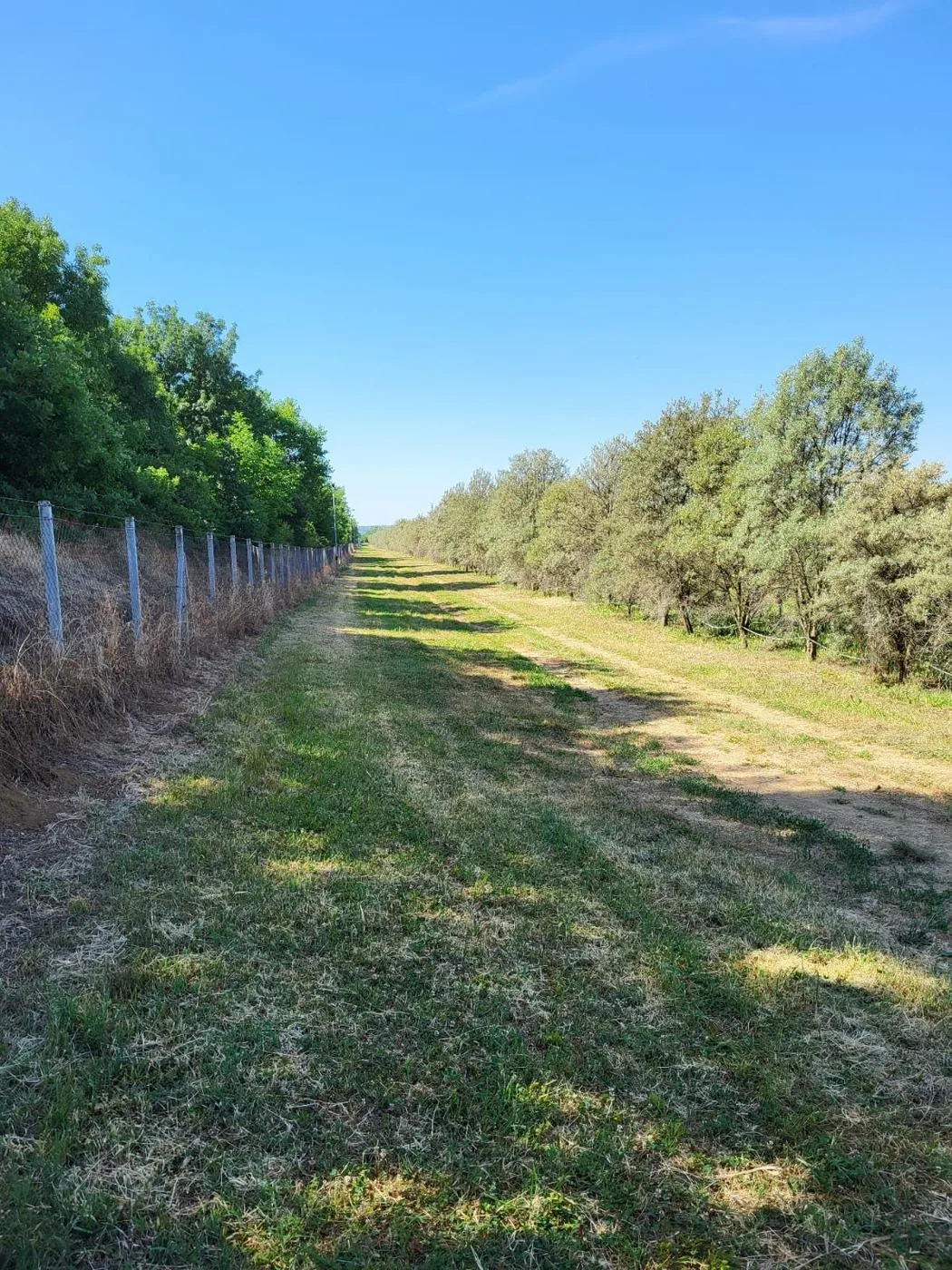
A productive sea-buckthorn root zone is not created by adding a named microbe or a large dose of organic matter. It depends first on a soil profile that gives roots air and water, then on biological processes within that environment. Sea buckthorn can form nitrogen-fixing nodules with Frankia, but this symbiosis is no reason to assume fertilizer is unnecessary or every soil will behave alike.1
Key takeaways
- Begin with drainage, soil structure, compaction and usable rooting depth; microbial inputs cannot correct a saturated or restricted root zone.
- Organic matter can support aggregation, water storage and nutrient cycling, but effects depend on soil texture and management.
- Frankia nodulation is a biological capacity, not a guaranteed nitrogen credit or yield outcome.2
- Diagnose the site before changing fertility or buying microbial products.
Start with the physical root environment
Roots need both water and oxygen. Compaction, restrictive layers or prolonged saturation can limit root activity even where soil tests show adequate nutrients; Washington State University describes these physical and oxygen constraints for tree-fruit orchards generally, not for sea-buckthorn field trials.3 Orberry’s approved growing guidance favors well-drained, aerated soil and warns against waterlogging. An older Manitoba government guide describes deep, well-drained sandy loam with high organic matter as favorable, while noting that root depth and spread were not established in its guidance.1 This is regional context, not a universal European soil specification.
Before planting, inspect representative areas rather than relying on surface appearance. Compare soil-pit or auger observations across wet and dry zones; note rooting depth, compacted horizons, mottling or standing water, and infiltration after rain. Laboratory analysis can add pH, salinity and nutrient information, but cannot replace assessment of drainage and structure. If water remains perched or subsoil is restrictive, resolve that site-design issue before treating biology as the answer.
Structure and organic matter shape the habitat
Soil structure describes how particles form aggregates and pores, influencing aeration, infiltration, drainage and root movement. Organic matter can contribute to aggregation, hold nutrients and buffer water availability, but benefits vary with texture and conditions. Washington State University’s orchard soil-health guidance explains how biological, physical and chemical properties interact, and why excess water can deprive roots of oxygen. It concerns tree-fruit orchard systems generally, not a controlled sea-buckthorn trial, so use it as a framework rather than a crop-specific recipe.3
Keep organic-matter management practical. Retain suitable residues or use locally appropriate mulch where it fits the orchard floor, keeping material away from stems and avoiding a wet, stagnant collar. Cover crops may protect soil and provide living roots, but species, water competition, mowing and traffic need to suit the site. A high organic-matter percentage alone does not prove good soil health if the profile remains compacted or waterlogged.
What the microbiology can—and cannot—tell you
A general claim that “more microbes is better” oversimplifies soil biology. Protect soil habitat by avoiding unnecessary disturbance and traffic on wet ground, maintaining suitable cover where practical, and addressing drainage or compaction based on evidence.
A 2024 study of Mongolian sea buckthorn sampled root nodules, nodule-surface soil and bulk soil in three ecological settings in northern China. Sequencing found root nodules enriched in Actinobacteria, with Frankia prominent, and identified nitrogen-fixation genes in the nodule community.2 This helps explain the association; it did not establish a universal inoculant prescription, nitrogen delivery rate or yield response. Do not extrapolate it into a promise for European sites.
Frankia nodules are a clue, not a fertilizer plan
Frankia is a nitrogen-fixing actinobacterium that forms nodules on sea-buckthorn roots. The existence of this symbiosis does not quantify how much nitrogen a particular orchard receives, when it becomes available, or whether other nutrients are limiting. Do not assume inoculation is required, nodules eliminate nutrient management, or adding nitrogen necessarily improves growth. Review soil and plant evidence with a local adviser before changing inputs.
For weak growth, investigate water regime, roots, weeds, planting quality, pH and nutrients together rather than attributing symptoms to an “unbalanced microbiome.”
A practical root-zone check
| Root-zone layer | What to check | Decision before planting or intervention |
|---|---|---|
| Physical | Drainage after rain, compaction, restrictive layers, rooting depth | Is the profile aerated and accessible, or does site preparation need revision? |
| Chemical | Laboratory pH, salinity and nutrient results | Is a measured constraint present, and is a locally justified correction needed? |
| Biological | Residue breakdown, living cover, root condition and nodules | What is observed over time? Do not infer performance from a product label. |
| Management | Traffic, tillage, mulch and irrigation pattern | Which practice protects structure without increasing saturation or competition? |
What this means for a commercial orchard
Support root-zone biology through sound site and floor management, not as a stand-alone input category. Before ordering plants, map wet areas and soil variability, obtain representative analyses, and plan access, irrigation and orchard-floor practices to limit compaction and chronic saturation. The site suitability guide helps structure an initial screen; use Plan Your Orchard to connect findings to layout and establishment. Professional planting material is a separate project decision from soil amendments and microbial products.
Use a simple sequence: observe the profile, test what can be measured, identify the limiting factor, make one justified change, then monitor. Record block, timing, rainfall or irrigation and root condition so later decisions reflect the site rather than generic promises. If drainage, compaction or nutrient status remains uncertain, consult a local soil or horticultural specialist before broad treatments. For practical establishment guidance, explore Orberry Grower Knowledge.
References
Planning an orchard with these varieties? Adelin answers project questions directly.