
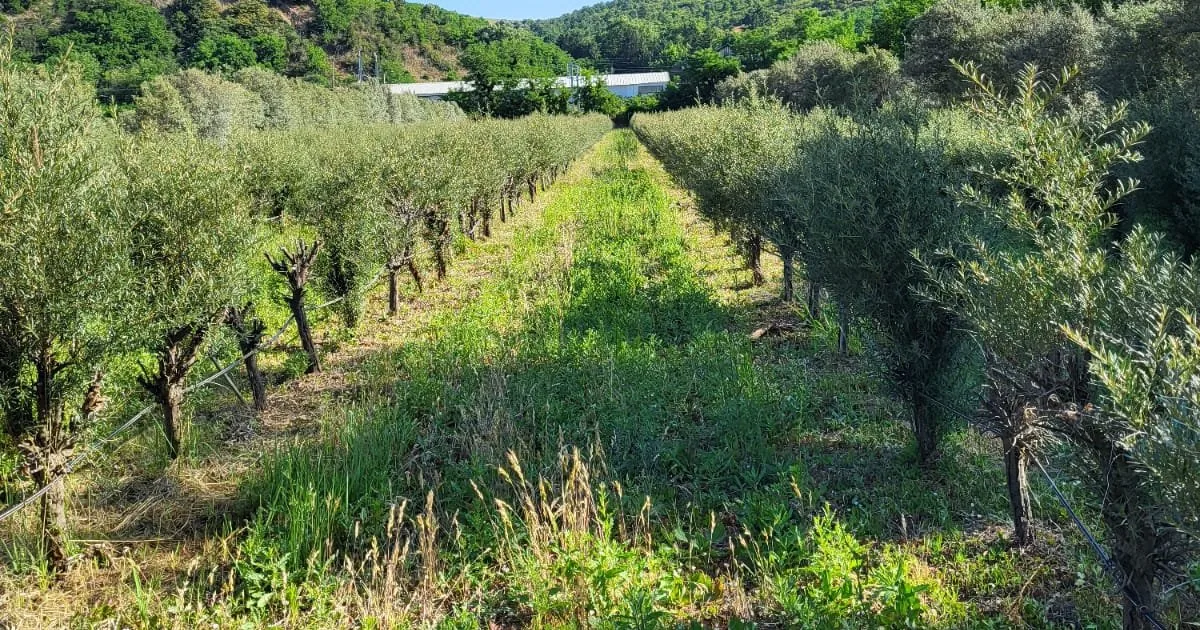
A one-hectare sea buckthorn orchard is a project to design, not a fixed plant kit to order. Start with plantable land, then select spacing, cultivars and pollinator placement around equipment, wind exposure and harvest plans. A calculated position count is a starting estimate; the final quantity follows the field layout.
Key takeaways
- At 3.5 m between rows and 1.25 m between plants, one hectare gives 2,286 estimated positions before headlands.
- Choose female cultivars and plan Andros as part of one layout, considering processing objectives, wind and machinery.
- Test and prepare the site before planting, and specify material by variety, age, format and measured size.
- Use the calculator for an initial estimate, then confirm the field plan and quantity through a project-specific discussion.
Estimate positions, then map plantable area
Calculate positions per hectare = 10,000 ÷ (row spacing in metres × in-row spacing in metres). At 3.5 m × 1.25 m, this is 10,000 ÷ 4.375 = 2,285.7, rounded to 2,286 positions per hectare. At the same spacing, whole-project estimates are 11,429 positions over 5 ha and 22,857 over 10 ha.
| Area at 3.5 m × 1.25 m | Approximate positions before headlands |
|---|---|
| 1 ha | 2,286 |
| 5 ha | 11,429 |
| 10 ha | 22,857 |
These are geometric estimates across the stated gross area, not order commitments. Headlands are working and turning areas at row ends; access lanes, boundaries, obstacles and unplantable ground reduce the usable area. Enter area and spacing in the Orberry orchard calculator, then map rows against the actual parcel.
Choose cultivars and integrate Andros
The Orberry portfolio comprises four female cultivars—Mara, Clara, Cora and Dora—and Andros, the male pollinator. Sea buckthorn is dioecious: male and female flowers occur on separate plants. It is wind-pollinated, so a fruiting orchard needs males positioned to distribute pollen through the female planting.1
Orberry identifies approximately one Andros for every eight female plants as an initial planning reference, not a universal ratio. Final quantities and distribution depend on field geometry, prevailing wind, row design and project requirements. Put male positions into the layout from the start.
Choose female cultivars by intended processing use, harvest strategy and desired harvest window. Review the Orberry varieties and compare the cultivars before settling on a mix. A published Moldova study of the four female cultivars found that fruit composition varied by cultivar and ripening stage. This single-site observation can inform selection, but is not a specification for a future crop.4
Set spacing and layout around operations
The 3.5 m × 1.25 m configuration is a reference scenario, not a universal optimum. Set row spacing to accommodate expected machinery. Consider turning needs, row length, access, harvest and movement of fruit from the field. Wind direction also informs Andros placement. A sketch showing boundaries, slope, access and non-planting areas helps convert density into a workable design.
Prepare the site before delivery
Map differences in soil, drainage and access. Arrange a representative soil analysis before deciding on amendments; do not apply lime or fertilizer from a generic recipe. Sea buckthorn is associated with open, well-lit sites and free-draining soils, while prolonged waterlogging can compromise establishment.1 3 Assess the field rather than assuming general crop tolerance makes every site suitable.
Control perennial weeds and complete necessary cultivation before plants arrive. A production guide recommends beginning preparation well ahead of planting; timing and methods must suit local soil and farm practice.3 Plan establishment water where rainfall or soil water-holding capacity may be limiting. A Nevada extension trial describes timely planting and irrigation in its regional conditions; it is context, not a universal European prescription.2
Specify planting material and delivery
Define the order as variety → plant age → format → measured size → project quantity. Orberry material is specified by cultivar, Year 1 or Year 2, Bare Root or Potted, and project size class. Height alone does not establish age or root quality. Ask the nursery to confirm batch specification, traceability, applicable plant-health documents for the shipment, packing and dispatch period. See professional planting material for the product framework.
Reconcile the quote with the row plan. Confirm female and Andros quantities separately, row locations, unloading access and planting sequence. A quote specifies proposed material and commercial terms; do not infer order quantity from gross-area calculations.
First-year priorities
On arrival, check labels and quantities against the agreed specification, and link batch records to planted rows. Protect roots from drying, plant in suitable field conditions, maintain access for inspection and cultivation, manage competing weeds, and monitor soil moisture to guide establishment watering. Record gaps or damage promptly and follow the nursery’s handling guidance. These steps support establishment but do not guarantee survival or future yield.
What this means for a commercial orchard
Turn the hectare into a workable block: mark plantable boundaries, machinery-width rows, headlands and access, then test a spacing scenario. Use the calculator for a first estimate and discuss cultivar choice and Andros placement with the field sketch. When specifications are ready, request a project-specific Orberry quote.
References
- The Systematics, Reproductive Biology, Biochemistry, and Breeding of Sea Buckthorn—A Review
- Testing Seaberry as an Alternative Crop in Nevada
- Sea Buckthorn Production Guide
- Technological Potential and Changes in Bioactive Compounds During Ripening of Four Sea Buckthorn Cultivars Grown in the Republic of Moldova
Planning an orchard with these varieties? Adelin answers project questions directly.