
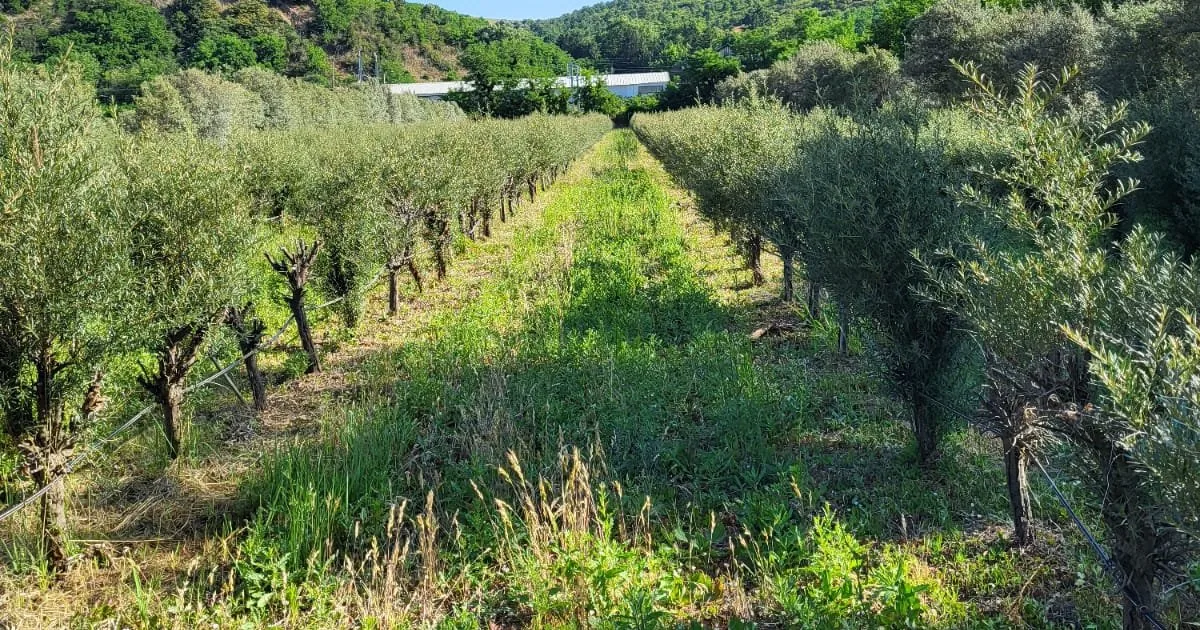
A 5–10 hectare sea buckthorn orchard is an operating system, not simply a larger small planting. Row geometry affects machinery access and harvest; cultivar blocks and male pollinators shape the field; and the plant schedule must match nursery specifications and delivery capacity. Begin with the site and workflow, then convert a mapped layout into a project-specific supply plan.
Key takeaways
- At 3.5 m between rows and 1.25 m in-row, the estimate is 2,286 positions/ha, or 11,429 positions at 5 ha and 22,857 at 10 ha, before headlands.
- Gross hectares are not plantable area, and a position estimate is not a nursery order commitment.
- Select machinery, harvest method, row length, headlands, access and pollination layout together before fixing spacing.
- Set cultivar mix, Andros placement, planting-material specification, delivery window and any phasing against the real block plan.
Turn hectares into a field layout
Separate the parcel boundary from ground that can carry rows. Mark slopes, wet or unsuitable ground, drainage, buildings, roads, power lines and other exclusions. Draw row direction and length, headlands—the working and turning space at row ends—and routes for equipment, workers and harvested fruit. A scaled plan lets you test the configuration before ordering. A Montana State University apple-orchard guide illustrates the wider design principle: spacing, orientation and turnaround should serve the equipment and site. Its crop-specific advice is not a sea-buckthorn prescription.1
Use positions per hectare = 10,000 ÷ (row spacing in metres × in-row spacing in metres) for an initial estimate. At 3.5 m × 1.25 m, this is 10,000 ÷ 4.375 = 2,285.7, rounded to 2,286. The table applies this formula to the full project area, rounding each total to a whole position.
| Gross project area at 3.5 m × 1.25 m | Estimated positions before headlands |
|---|---|
| 5 ha | 11,429 |
| 10 ha | 22,857 |
These totals do not deduct headlands, access lanes or unplantable ground. After drawing the rows, recalculate against net plantable area and the rows that fit. Use the Orberry orchard calculator to compare scenarios, but distinguish gross hectares, geometric positions and the final plant order. Treat the calculator output as a scenario estimate; confirm final quantities against the project layout and quote.
Design around machinery, row length and harvest
List equipment needed for establishment and maintenance, transport, and any proposed harvesting. Confirm operating width, turning and access requirements with operators or suppliers. Allow for trailer movements and loading as well as passage between rows. Set headlands from the actual machine combination and site, not a generic allowance.
Decide how fruit will be harvested and where it goes after leaving the row. Sea buckthorn fruit can be difficult to detach; research reviews describe direct fruit removal, branch-based and freezing-assisted approaches with different equipment and handling implications.2 Thus, row access and field-to-processing logistics are design inputs. Set row length and cross-alleys to suit the parcel and workflow; no single row length fits every block.
Plan cultivar blocks and pollination together
Choose female cultivars to match buyer or processing objectives, desired harvest sequence and crop handling. Mara, Clara, Cora and Dora have distinct portfolio profiles; compare them in the Orberry varieties overview and variety comparison before assigning blocks. Trial observations can inform selection but are not guaranteed commercial specifications. A single cultivar or a deliberate mix may suit the intended market and operating plan.
Sea buckthorn is dioecious, with male and female flowers on separate plants, and wind-pollinated.3 Include Andros, Orberry’s male pollinator, in the initial plan. Prevailing wind, geometry, rows and machinery inform whether males are interspersed or in dedicated sections. Orberry’s approximately 1:8 Andros-to-female figure is an initial planning reference, not a universal ratio or final prescription. Confirm count and placement against the project layout.
Coordinate nursery supply, delivery and project phasing
For each cultivar and pollinator, specify variety → plant age → format → size → project quantity. Orberry distinguishes Year 1 and Year 2, Bare Root and Potted, and measured height classes. Height alone does not define age or root quality. Ask for batch specification, traceability, the plant-health documents applicable to the shipment, packing, dispatch period and commercial terms; see professional planting material. Do not assume every combination can be supplied in the requested volume or season.
A project may be planted at once or in phases. Compare options against field readiness, labour and machinery capacity, planting season, delivery sequence and record-keeping across blocks. If phasing, agree each phase’s blocks, cultivars and pollinator positions before confirming quantities. The commercial orchard planning discussion and nursery quote should use the same field plan.
What this means for a commercial orchard
Your next decision is to draft a block plan: mark net plantable area, machinery, headlands, row direction and length, harvest route, female blocks and Andros positions. Test spacing and reconcile the estimate to rows that fit. Request nursery confirmation only after variety, age, format, size, quantity and delivery window are clear.
For a project-specific review and quote, discuss your commercial project. Include the field plan and target planting season so layout assumptions and planting-material specifications can be assessed together.
References
Planning an orchard with these varieties? Adelin answers project questions directly.