
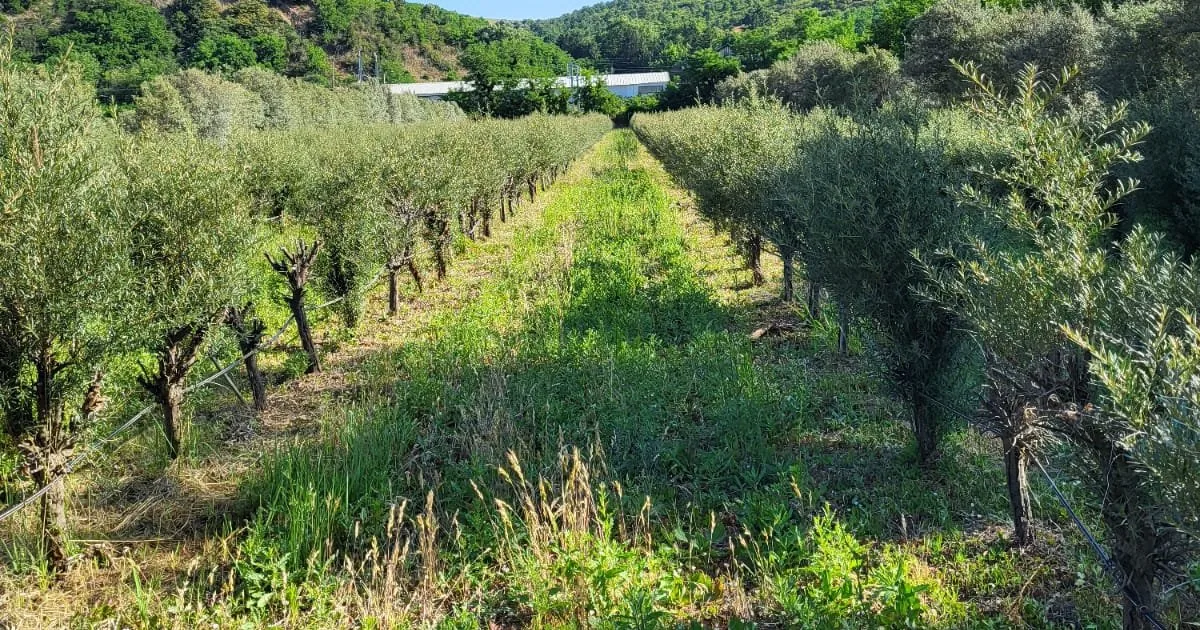
There is no reliable universal price per hectare for establishing a commercial sea buckthorn orchard. The total depends on the parcel, planting layout, material specification, water system, machinery strategy and the route from field to processor. A useful estimate therefore starts with a defined project and itemised assumptions—not a headline figure.
Key takeaways
- Separate one-time establishment investment from annual care and later harvest or processing costs.
- Calculate plants from the plantable layout, then price the exact variety, age, format and size specification.
- Request comparable quotes for site work, irrigation, planting and harvest operations.
- Show cash spending and the economic cost of owned land, equipment and capital separately.
Define what “establishment cost” includes
Choose a budget boundary before comparing estimates. One practical project budget runs from pre-plant site work through planting and the first establishment years. Show the orchard’s later bearing-year operations in a separate schedule. If a source includes land purchase, financing, buildings or years before first commercial harvest, its total is not directly comparable with a narrower planting budget. University orchard budgets make their crop, region, practices, time period and accounting assumptions explicit; their figures are examples of a method, not transferable sea buckthorn rates.1 2
Build the estimate from project quantities
| Cost line | Quantity or decision to document | Quote or record to collect |
|---|---|---|
| Planting material | Plantable area, layout positions and pollinator plan; variety, age, format and size | Nursery quote by specification, plus freight and handling |
| Site preparation | Soil and drainage constraints, clearing, levelling, access and any amendments | Contractor scope, unit and mobilization charges |
| Water and irrigation | Water source, conveyance, filtration, storage and field distribution required | Design, installed equipment, connection and commissioning costs |
| Planting and protection | Layout, marking, planting labour, guards or supports if the design requires them | Labour or contractor quote and materials list |
| Machinery and access | Equipment bought, adapted, leased or hired; headlands, turning and load-out areas | Purchase or hire assumptions, delivery, repairs and operating hours |
| Establishment care | Weed control, irrigation, replacement plants, pruning or training and monitoring | Annual labour, inputs and replacement allowance by year |
| Harvest and postharvest | Harvest method, bins, loading, transport, cooling or freezing and processing access | Equipment, service, labour and handling quotes; identify what is off-farm |
For plant numbers, use the actual row plan and subtract headlands, access and unplantable ground. Orberry’s reference configuration is approximately 2,200–2,300 positions per hectare at 3.50 × 1.25 m, before those exclusions; it is a planning reference, not a universal design. Include Andros in the layout for pollination, with quantity and placement confirmed for the project. Orberry commercial planting material is specified by variety, Year 1 or Year 2, Bare Root or Potted, and plant size; the stated commercial minimum is 500 plants. Ask for a project-specific quote rather than assuming a price or availability. See professional planting material and use the orchard calculator as an initial quantity check.
Separate investment, annual costs and accounting views
Add each line as quantity × quoted unit rate, then sum by year. Keep durable assets—such as irrigation mains, pumps, storage, fencing or machinery—visible as capital items. Record recurring costs such as establishment labour, water, weed management, maintenance, freight and replacement plants in the year they occur. Include contractor mobilization and access costs where quoted.
Prepare two views. The cash budget shows when money is actually paid, including deposits, delivery and installation. The economic budget also records costs that may not trigger an immediate payment, such as the use of owned land, existing machinery and invested capital. Established enterprise budgets distinguish operating costs from fixed and non-cash costs; that distinction is useful, but the underlying crop, region and prices must not be carried over to sea buckthorn.2 Keep financing assumptions visible rather than burying them in a single “cost per hectare.”
Compare scenarios without hiding assumptions
Build a base case around the intended orchard layout and management plan. Then compare alternatives only where they answer a real decision: staged versus full-area planting, hired versus owned machinery, or a more mechanised harvest plan. For each option, show the changed investment, operating labour, capacity and what equipment or service is excluded. Do not count a machine as free because it is already owned; include its use and maintenance in the economic view.
Harvest deserves early attention. Sea buckthorn fruit can be difficult to detach, and a review describes manual, branch-cutting, freezing and mechanical approaches under development or use in different settings.3 That literature does not establish one best system or a cost for a particular European orchard. It does show why row access, loading, labour, transport and the receiving processor should be discussed before planting, not after the crop is established.
What this means for a commercial orchard
Before requesting prices, prepare a one-page brief with gross and plantable area, a draft row plan, intended planting-material specification, water and site information, preferred establishment schedule and likely harvest route. Mark every estimate as a quote, measured quantity or provisional allowance, and note its date and scope. Calculate both total project cash need by year and an equivalent cost per plantable hectare; state clearly what each excludes.
Use the orchard calculator for a first planting scenario, then review layout and infrastructure through Plan Your Orchard or Commercial Orchards. When quantities and specifications are clear, request a project-specific planting material quote. The result will be a budget that can be revised against real project quotes, rather than a misleading European average.
References
Planning an orchard with these varieties? Adelin answers project questions directly.