
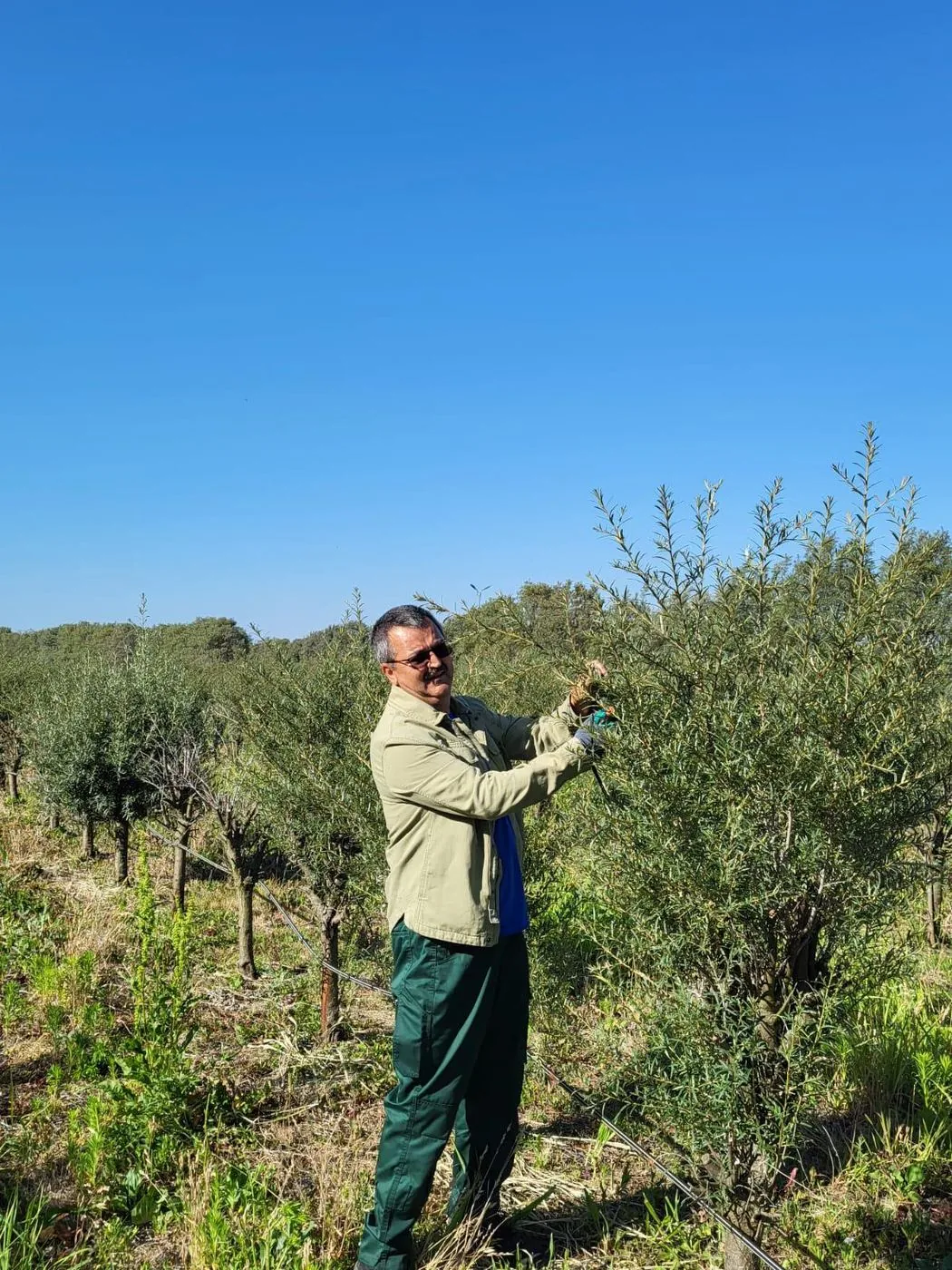
Sea-buckthorn pest and disease management is a repeatable process: prevent stress, scout, diagnose, choose a proportionate response and check the result. General biological-conservation principles may contribute, but target-specific field efficacy against sea-buckthorn pests is incompletely established; diagnosis comes first. Integrated pest management (IPM) combines prevention, monitoring and suitable cultural, physical, biological and, where appropriate, other controls; it aims to manage damage rather than eradicate every organism.1
Key takeaways
- Start with orchard hygiene and records, then monitor plants and fruit consistently through the season.
- Treat symptoms as clues, not a diagnosis. Similar decline can arise from different pathogens, site stress or other causes.
- Use beneficial organisms or biological products only when the target, timing and local suitability are established. Sea-buckthorn-specific evidence is uneven.
- Set responses from confirmed identification and local advice. Do not use a universal spray, trap schedule or treatment recipe.
Prevent problems before they spread
Prevention begins with a suitable, well-drained site and careful establishment. Check incoming material for clear varietal identity, healthy roots and shoots, and appropriate traceability documents. Keep batch and planting maps: if a problem appears, its distribution may help distinguish a localized planting issue from a block-wide pattern. See the site-suitability guide and commercial orchard planning when assessing these foundations.
Avoid moving suspicious plant material or soil between blocks. Prune confirmed affected wood with clean tools, and dispose of it according to local guidance. Record when and where symptoms appeared, weather, irrigation, pruning and actions taken. Hygiene cannot guarantee prevention, but it helps limit avoidable spread and supports investigation.
A review of sea-buckthorn fungal diseases describes canker, wilt and decline, including trunk or branch cracks, dead buds and leaves, tissue necrosis and root symptoms. It also emphasizes that the published evidence covers relatively few diseases and that more research is needed.2 A symptom such as wilting or dieback therefore cannot by itself identify a pathogen or justify a treatment.
Monitor for changes and confirm the cause
Walk representative rows regularly, with closer attention in blocks with a problem history or risk conditions. Compare affected and healthy plants. Note which parts show signs, whether plants are clustered or scattered and whether the pattern is expanding. Inspect fruit as well as foliage. Photographs and a simple block map make observations comparable over time.
For insect pests, record what you actually observe—adult insects, feeding signs, damaged fruit and timing. The sea-buckthorn fruit fly (Rhagoletis batava) is a documented fruit pest in parts of Europe. A multiyear study in three Polish plantations evaluated several trap and attractant combinations. Some tested approaches reduced fly populations and fruit damage under those study conditions, but the relationship between trap catches and damaged fruit was generally weak. The result supports local evaluation as part of IPM, not a universal trap or threshold for every orchard.3
Traps also need interpretation and upkeep. In three Latvian organic orchards, a study comparing clean sticky traps with traps partly covered by non-target insects found no significant difference in fruit-fly catches at the tested saturation levels and exposure periods. That finding is useful context, not a reason to ignore trap condition or apply the same inspection interval everywhere.4 Confirm suspected pests with a local adviser or diagnostic service, especially before making a costly or disruptive intervention.
Biological options: distinguish conservation from untested treatments
One practical conservation measure is to avoid unnecessary broad-impact interventions that harm naturally occurring predators and parasitoids. General IPM guidance explains that conserving habitat and food for beneficial organisms can support them, whereas releasing a purchased organism requires a verified target and careful timing.1 This is a general principle, not evidence that a named beneficial species controls sea-buckthorn fruit fly or a particular fungal disease.
The Polish fruit-fly researchers proposed testing soil-applied entomopathogenic fungi against juvenile stages as one possible addition to mass trapping, but their study did not test that biological treatment.3 It is a research avenue, not an Orberry recommendation, demonstrated orchard control or authorization for use. Confirm the diagnosed target, evidence, legal status and local advice before considering any organism or microbial product.
For fruit fly, trapping is a physical monitoring or suppression method, not biological control in the strict sense. It can complement a broader programme where local evidence supports it. The biology of R. batava also makes late intervention difficult: larvae develop inside fruit, so monitoring adults and detecting risk early matter. The Polish field results are promising for those sites, but do not establish efficacy, authorization or an economic threshold across Europe.3
A practical orchard decision framework
| Step | What to do | Record or decision point |
|---|---|---|
| Prevent | Review drainage, plant condition, block hygiene and incoming-stock records. | Establish a baseline map and note recurring risk areas. |
| Monitor | Inspect representative plants, fruit and any locally appropriate traps. | Date, block, symptom or insect observed, extent and photographs. |
| Diagnose | Compare healthy and affected areas; seek expert or laboratory identification when uncertain. | Do not choose a treatment from symptoms alone. |
| Respond | Prioritize sanitation, cultural or physical measures; consider biological controls when target-specific evidence exists. | Check local guidance and product instructions before use. |
| Evaluate | Revisit treated and untreated comparison areas where practical. | Record whether damage changed and revise the plan. |
The presence of an organism alone is not proof of economically important damage.1
What this means for a commercial orchard
Make monitoring a routine operation, assign responsibility and use consistent records. Agree when to seek diagnostic help. Frequency depends on pest biology, crop stage, site history and local conditions; no single calendar or threshold fits every European orchard. For suspected fruit fly or unexplained dieback, consult a regional plant-health or crop-protection specialist before choosing a control.
Use the orchard-spacing guide to connect access and block layout with practical scouting. For related establishment decisions, see common orchard-establishment mistakes. Continue with Grower Knowledge for other technical topics.
References
- 8. Integrated Pest Management (IPM)
- Sea Buckthorn Diseases Caused by Pathogenic Fungi
- Evaluation of Different Attractants for Monitoring and Mass Trapping of Rhagoletis batava (Hering) in Organic Sea Buckthorn Plantations
- Impact of non-target insect accumulation in traps on sea buckthorn fruit fly (Rhagoletis batava) trap catches in sea buckthorn (Hippophae rhamnoides) plantations
Planning an orchard with these varieties? Adelin answers project questions directly.