
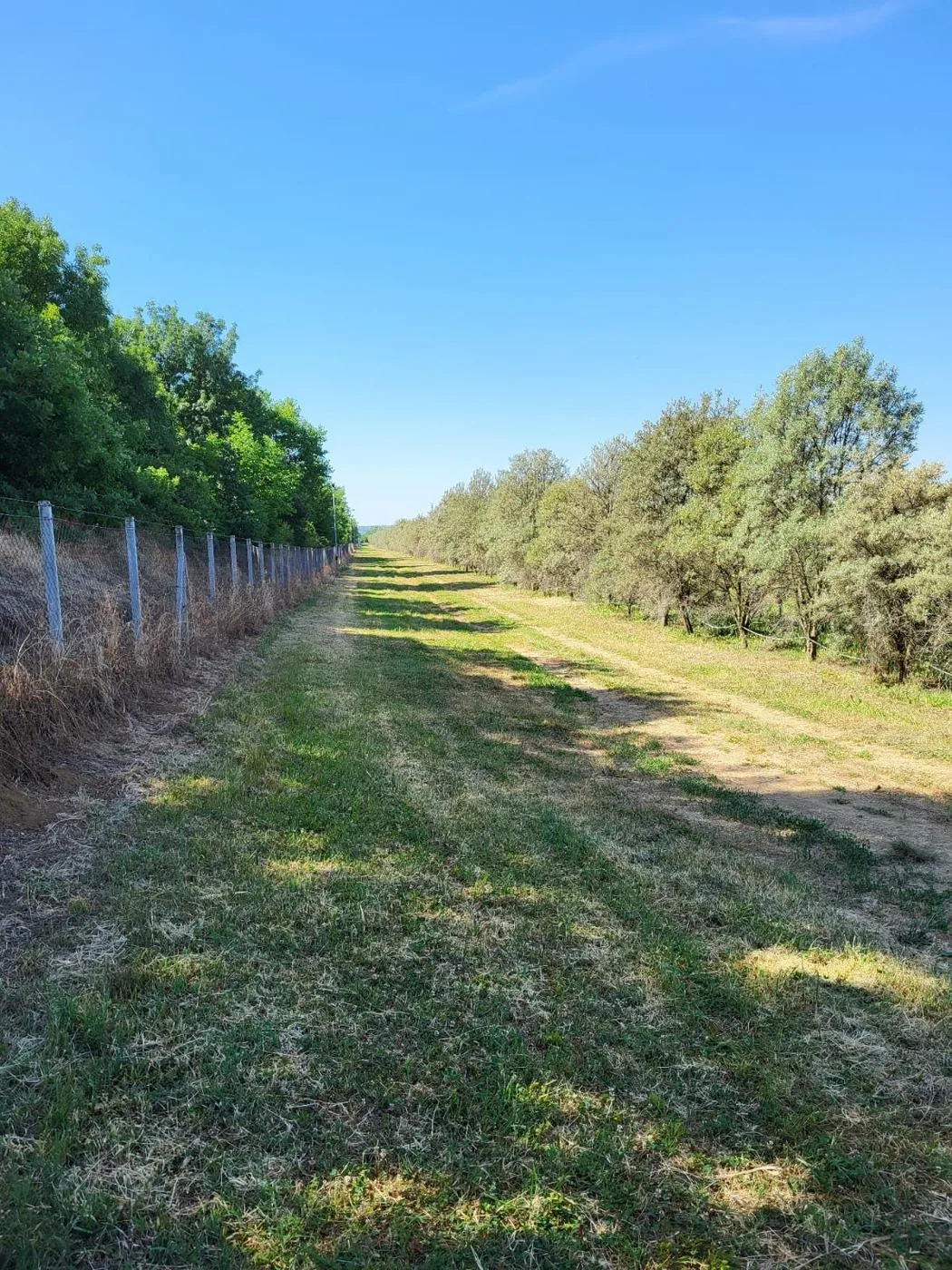
A commercial sea buckthorn orchard can be profitable, but no single yield, fruit price or payback period answers the question for every project. Results depend on saleable output, orchard maturity, harvest timing and method, labour, processing costs, losses and realized price. Model these together over the orchard’s life instead of multiplying an optimistic yield by an assumed market price.
Key takeaways
- Use a site-specific saleable-crop estimate and buyer-validated price, not generic market figures or trial maxima.
- Model establishment and productive years separately, including the actual harvest cycle.
- Include harvest, handling, processing and losses in the margin.
- Stress-test downside cases; a positive margin in one harvest year does not establish whole-orchard profitability.
Start with saleable yield and realized price
Estimate kilograms that can be harvested and accepted for the intended outlet—not simply biological yield per hectare. Allow for immature years, uneven blocks, uncollected fruit, grading rejection and handling loss. Separate blocks where cultivar maturity or handling needs differ. Orberry’s variety portfolio describes relative traits and processing potential, but it does not provide a yield forecast for a new site.
Ask what a buyer would pay for the actual product and delivery basis. Fruit delivered for processing is not the same product as cleaned, frozen or processed material. Specifications, quality limits, volume, packaging, delivery point and deductions affect realized revenue. Do not substitute retail value, a market headline or a verbal expression of interest for a project-specific offer.
A first calculation is saleable kilograms × realized price per kilogram = gross crop revenue. Revenue and price must refer to the same product stage and unit. Then deduct harvest and post-harvest variable costs to find crop contribution.
Treat harvest and processing as core cost drivers
Sea buckthorn fruit is tightly bunched on thorn-bearing branches. A research review describes harvest difficulties and surveys mechanized technologies; it does not prescribe one universally suitable system.1 Compare feasible methods for the block and outlet. Hand picking, cutting fruit-bearing branches, freezing and separating berries, or mechanized collection require different labour, equipment and handling. Saving field labour may add machinery, maintenance, freezing, transport or fruit-loss costs.
Trace the crop through the whole chain: field harvest, bins and internal transport, cooling or freezing, cleaning, storage, processing fees, packaging, freight and rejected fruit. Record the value of family labour and owned machinery as well as cash expenses; otherwise the model can appear profitable by treating resources as free.
Build a seasonal, whole-orchard model
Use one row per year and separate blocks or harvest cycles. Include establishment, replacement plants, annual maintenance, harvest, processing, sales, financing and eventual renewal. Match expenses to expected receipts. If the crop is harvested periodically, place the sales and harvest costs in those years; also calculate the working capital needed between harvests.
For a practical framework, document four inputs. Saleable crop: conservative, expected and stronger volumes by year, allowing for maturity and harvest cycle. Realized price: the product, quality, volume and delivery terms, using buyer terms or a clearly labelled planning assumption. Harvest and processing: labour or machinery, collection losses, storage and processor quotations. Investment and annual costs: site works, plants, infrastructure, maintenance, finance and orchard life. Recording the basis and source for each input makes the calculation auditable.
For each year, calculate operating margin as sales revenue minus variable harvest, handling and processing costs, minus annual operating costs. Keep initial investment separate. Then assess cumulative cash flow, discounted returns and the year capital is recovered. A discount rate should reflect the investor’s financing cost and risk. Profitability, liquidity and payback differ: a project may have positive long-term returns yet lack cash in a non-harvest year.
Published models are examples, not promises
A Finnish farm-model study compared small and large farms, conventional and organic systems, and hand branch-cutting versus machinery. Its large-scale scenario harvested on a three-year cycle. Given that study’s yields, prices and costs, the modeled farms were not profitable. This describes Finnish scenarios, not every production system or a current European price outlook.2
A 2018 Hungarian journal study modeled a 10-hectare intensive plantation with irrigation, high-quality soil and 2016 input and output prices. Its selected scenarios assumed high yields of 12–24 tonnes per hectare and projected recovery of plantation costs in six to eight years within that deterministic model. This deterministic model is specific to its country, period and assumptions; it is not a payback forecast for a different site, cultivar, harvest system or buyer.3 Neither study supplies transferable yield or price assumptions.
What this means for a commercial orchard
Before ordering plants, specify the target outlet, product requirements, delivery calendar and harvest method. Ask potential buyers or processors to clarify accepted volumes, quality limits, testing, price basis and deductions. Have local advisers check the yield ramp, labour, processing capacity and infrastructure assumptions. The orchard calculator supports planting-position planning, not financial forecasting; density alone is not a proxy for profit.
Build three cases. In the downside case, reduce saleable volume and price, raise labour or processing costs, and test a later start to commercial harvest. Use documented assumptions in the expected case. Keep the strong case plausible rather than relying on a trial maximum. Proceed only if a credible downside remains financeable and both the buyer route and harvest-cycle cash needs are understood. For a site- and scale-specific discussion, contact Orberry about your commercial project.
Related reading
For the production timeline, see When Does a Sea Buckthorn Orchard Start Producing?. Larger projects may also consult How to Plan a 5–10 Hectare Commercial Sea Buckthorn Orchard.
References
Planning an orchard with these varieties? Adelin answers project questions directly.